Exploring the Wonders of Kharg Island
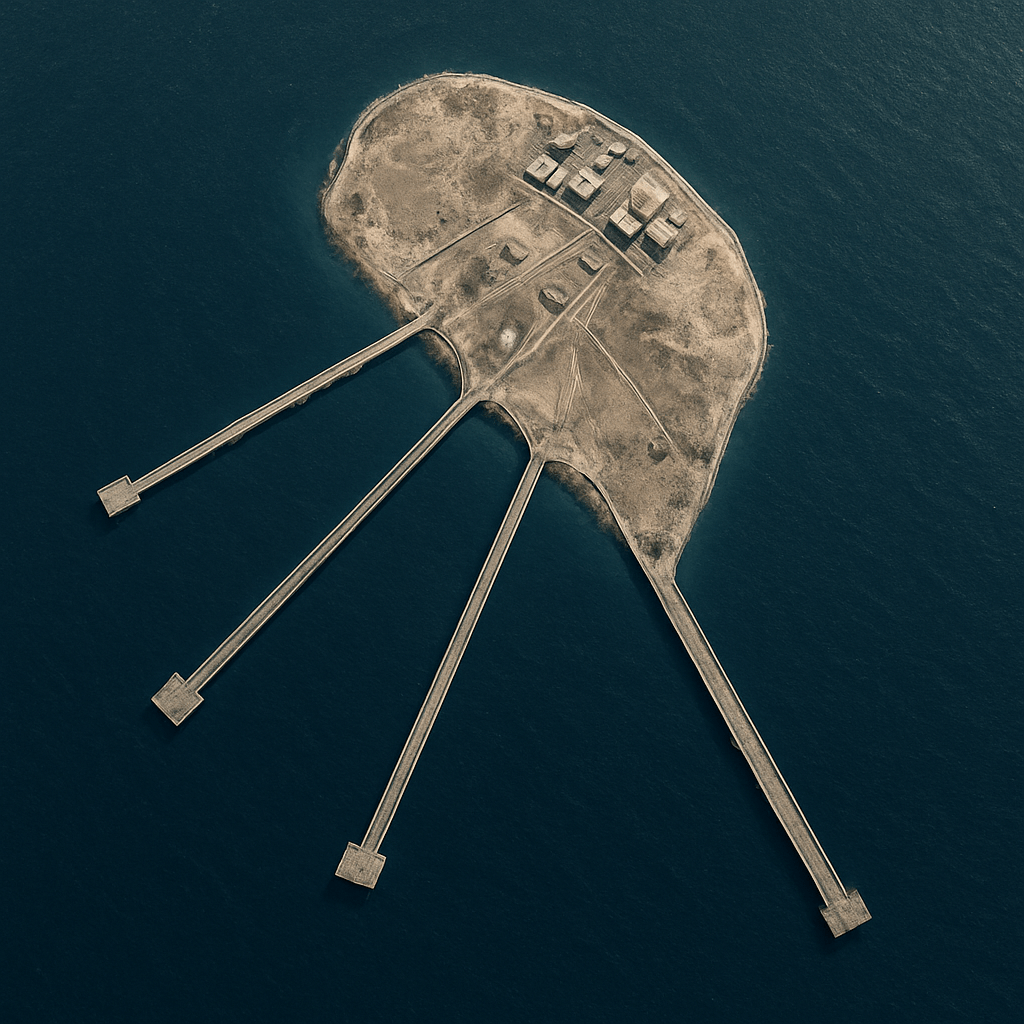
Zoom into the northern Persian Gulf on a satellite map, and you’ll find a tiny teardrop of land known as Kharg Island. Though it covers just 20 square kilometers—roughly six times the size of New York’s Central Park—this coral-fringed rock is far more than a tropical outpost.
If the Iranian economy has a heartbeat, it pulses through the heavy pipelines located here. Industry data reveals that over 90% of the nation’s wealth flows through this facility, defining the maximum limit of Persian Gulf crude oil export capacity. By anchoring the strategic role of Bushehr maritime logistics, this deep-water terminal acts like a super-sized gas station, allowing massive tankers to load energy destined for global markets.
How Kharg Island Became the World’s Most Important ‘Super-Sized Gas Station’
Kharg’s dominance relies on the specific ships it serves. These aren’t standard cargo boats; they are Very Large Crude Carriers (VLCCs), massive floating skyscrapers that can stretch longer than three football fields. Most coastal ports are simply too shallow to handle these giants, which sit deep in the water when fully loaded. Kharg Island acts as a natural deep-water berth, providing the rare geographical depth required for these behemoths to dock safely without running aground.
Getting the oil to the island requires a feat of underwater engineering. Massive pipelines run along the sea floor, pumping crude from mainland fields directly into the island’s storage tanks, effectively turning the coral reef into a massive holding tank. On the eastern side, the T-Jetty pier acts as the high-traffic zone, capable of filling multiple standard tankers simultaneously to keep the supply chain moving.
On the western side, far offshore, lies the “Sea Island” terminal (Azarpad). This isolated platform is designed specifically for the heaviest lifting, serving ships that are physically too large to approach the main shore.
- T-Jetty: Handles medium vessels; acts like a multi-pump gas station for standard traffic.
- Sea Island: Exclusively for VLCCs; functions as a specialized deep-water zone for the world’s biggest buyers.
With such immense value concentrated in one spot, the island has inevitably become a primary target for military strategists.
From Dutch Forts to the ‘Tanker War’: The Strategic History of Kharg
Long before oil pipes crisscrossed the sand, Kharg was a prized trophy for European empires seeking dominance over trade routes. In 1753, the Dutch East India Company recognized the island’s strategic dominance over the northern Gulf and constructed Fort Mosselstein to control shipping lanes. Yet, the island’s story runs even deeper than colonial disputes. The discovery of cuneiform maritime records carved into local rock reveals that this small teardrop of land served as a vital sanctuary for sailors and merchants thousands of years ago, proving its status as a critical maritime “rest stop” dates back to antiquity.
Fast forward to the 20th century, and this historical trading post became the epicenter of the “Tanker War” during the Iran-Iraq conflict. Because the island handled nearly all of Iran’s crude exports, it effectively became a stationary target for Iraqi airstrikes aiming to sever the country’s economic arteries. Despite enduring heavy bombardment that panicked global markets and threatened energy security, the terminal’s redundant systems allowed it to keep operating, demonstrating the immense difficulty of totally shutting down such a massive energy hub.
Today, the scars of modern warfare sit alongside the ruins of the Dutch fort, creating a strange landscape where heavy industry overlaps with historical heritage. While the world focuses on the oil prices dictated by this terminal, few realize that life here persists in surprising ways beyond the machinery. This industrial fortress hides a natural vibrancy that stands in stark contrast to the steel and stone.
Beyond the Oil: The Unexpected Biodiversity of Kharg’s Coral Reefs and Gazelles
While the world visualizes Kharg Island, Iran as a landscape of steel pipes and smokestacks, the reality on the ground is surprisingly wild. The island operates as an “accidental sanctuary”; the same high-security protocols that protect oil infrastructure from sabotage also shield local wildlife from poachers and urban sprawl. Amidst the hum of export terminals, a thriving population of Persian gazelles roams freely. These animals have adapted to the industrial noise, grazing near the pipelines in a bizarre example of the biodiversity of gazelle populations on coral islands. This unintended conservation effect suggests that strict military zones can sometimes mimic the protection levels of national parks, allowing nature to reclaim the spaces between the machinery.
Beneath the waterline, the ecological value is even more critical. Kharg is fundamentally a coral island, and its fringing reefs provide a complex habitat that contradicts the “polluted wasteland” stereotype often associated with oil hubs. These reefs support marine life conservation in coral reef habitats, acting as nurseries for diverse aquatic life despite the heavy tanker traffic. Visitors with rare access to the island’s shores can observe a variety of species coexisting with the petroleum giants:
- Persian Gazelles: Roaming in herds across the restricted interior zones.
- Hawksbill Turtles: Endangered marine reptiles that feed along the coral fringe.
- Migratory Birds: Flamingos and terns using the island as a safe stopover in the Gulf.
This delicate balance between heavy industry and fragile ecosystems exists only because the island is cut off from the general public. Strict regulations governing entry enforce this isolation.
Navigating the ‘Fortress’: Why Kharg Island Remains a Restricted Military Zone
While the gazelles graze quietly, the island operates as a “fixed aircraft carrier,” heavily defended by missile batteries and naval patrols. This intense militarization is so iconic that it crossed into pop culture, where millions of gamers battled on the bf3 kharg island map without realizing they were simulating a real geopolitical flashpoint. This digital fame reflects a serious reality: Kharg is a closed fortress where unauthorized entry is treated as a hostile act.
For supertankers, approaching these shores requires strict adherence to designated lanes. Captains face the high-stakes challenge of navigating restricted military zones in the Gulf, where straying off-course can trigger international incidents. These rigid corridors protect the oil flow, highlighting the immense economic significance of Persian Gulf transit routes for global markets. Every ship docking here passes through a gauntlet of security, ensuring that this critical energy node remains secure against external threats.
The Gatekeeper: Why the World Can’t Ignore Kharg Island’s Stability
Kharg Island functions as the “exit door” for Iran’s economy rather than just a dot on a map. While comparing different Iranian oil export hubs reveals smaller players, Kharg acts as the ultimate gatekeeper where local stability directly dictates global gas prices. This tiny coral reef serves as a critical valve in the world’s energy engine.
Since this industrial fortress is restricted, accessible neighbors like Qeshm or Kish offer alternative experiences. The best time to visit Persian Gulf coastal regions is November through March to avoid the heat. Watching the news—or the horizon—now reveals the massive stakes floating in these blue waters.


Post Comment